Choosing the right lock for your door is a crucial step in protecting your home or business. Two of the most common options are night latches and deadbolts, but understanding the night latch vs deadbolt differences can help you make an informed decision. Each lock type offers unique features, levels of security, and installation requirements. This article explores their distinctions, advantages, and best use cases so you can select the ideal lock for your needs.
For those interested in compliance and security standards, you may also want to review the deadbolt lock codes and regulations to ensure your choice meets local requirements.
Understanding Night Latches and Deadbolts
Before comparing the differences between night latches and deadbolts, it’s important to understand what each lock is and how it functions.
What Is a Night Latch?
A night latch is a type of surface-mounted lock typically installed on the inside surface of a door. It features a spring-loaded latch that automatically locks the door when it’s closed. Night latches are often operated with a key from the outside and a knob or lever from the inside. They are commonly found on wooden front doors in the UK and some older homes elsewhere.
- Automatically locks when the door is closed
- Usually mounted on the interior surface of the door
- Operated by a key externally and a knob internally
- Can be locked or unlocked from the inside without a key
What Is a Deadbolt?
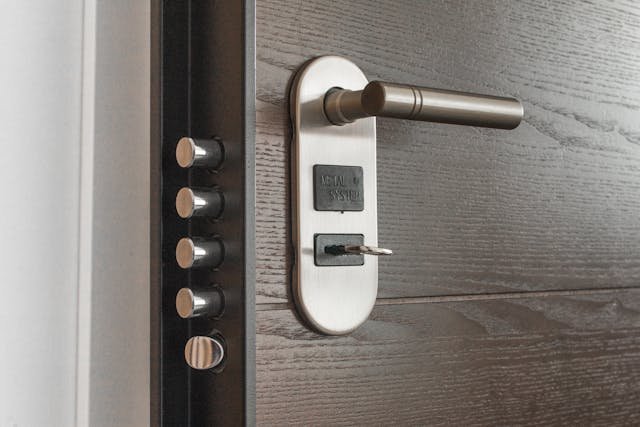
A deadbolt is a locking mechanism that uses a solid metal bolt to secure the door. Unlike a night latch, a deadbolt does not rely on a spring; it must be manually locked and unlocked with a key or thumb turn. Deadbolts are installed inside the door and extend deep into the door frame, providing a higher level of security.
- Requires manual locking and unlocking
- Installed within the door, not on the surface
- Operated by a key or thumb turn
- Offers robust resistance to forced entry
Night Latch vs Deadbolt Differences: Security and Functionality
When comparing night latch vs deadbolt differences, security is one of the most important factors. Let’s break down how each lock performs in terms of protection, convenience, and suitability for different doors.
Security Level
Deadbolts are generally considered more secure than night latches. The solid metal bolt of a deadbolt extends deep into the door frame, making it much harder to force open. Night latches, on the other hand, use a spring-loaded latch that can sometimes be slipped with a credit card or similar tool if not properly installed or if the door is not tightly fitted.
- Deadbolts provide superior resistance to kicking, prying, and lock picking.
- Night latches offer basic security but are best used in combination with another lock, such as a mortise or deadbolt.
Convenience and Everyday Use
Night latches are valued for their convenience. The automatic locking feature means you don’t have to remember to lock the door every time you leave. However, this can also be a drawback if you accidentally lock yourself out. Deadbolts require manual operation, so you must remember to lock and unlock them each time.
- Night latches are ideal for quick entry and exit, especially in busy households.
- Deadbolts require an extra step but provide peace of mind for overnight or extended security.
Installation and Compatibility
Night latches are typically easier to install since they are mounted on the door’s surface. Deadbolts require drilling into the door and frame, which can be more complex and may need professional installation. Deadbolts are compatible with most door types, while night latches are most commonly used on wooden doors.

When to Choose a Night Latch or a Deadbolt
Deciding between these two lock types depends on your specific needs and the level of security required. Here are some scenarios where one may be better suited than the other:
Best Uses for Night Latches
- Secondary security on front doors, especially when paired with a deadbolt or mortise lock
- Doors that require frequent access, such as apartment entrances or internal doors
- Situations where automatic locking is a priority
Best Uses for Deadbolts
- Primary security on external doors, including residential and commercial properties
- Doors that need maximum resistance to forced entry
- Applications where compliance with commercial deadbolt lock guide or residential deadbolt lock guide is required
Types of Night Latches and Deadbolts
Both night latches and deadbolts come in various styles and security grades. Understanding these options can help you further refine your choice.
Night Latch Variations
- Standard night latch: Basic model with a simple latch and key operation
- Deadlocking night latch: Can be locked from the inside, preventing the latch from being slipped
- Auto-deadlocking night latch: Automatically deadlocks when the door is closed, offering enhanced security
Deadbolt Types
- Single cylinder deadbolt: Keyed on the outside, thumb turn on the inside
- Double cylinder deadbolt: Keyed on both sides for extra security
- Lockable thumb turn deadbolt: Allows the thumb turn to be locked for added protection
For a deeper dive into the different deadbolt mechanisms, see this comprehensive guide to common deadbolt types.
Comparing Durability and Maintenance
Durability is another important aspect when evaluating night latch vs deadbolt differences. Deadbolts, especially those made from hardened steel, are built to withstand significant force and last for many years with minimal maintenance. Night latches, while generally reliable, may require occasional adjustment or lubrication to keep the spring mechanism functioning smoothly.
- Deadbolts are less prone to wear and tear due to their simple, robust design.
- Night latches may need attention if the latch becomes sticky or misaligned.
Cost Considerations
Night latches are typically less expensive than deadbolts, both in terms of the hardware and installation. However, for maximum security, many homeowners and businesses choose to install both types of locks on the same door. Investing in a high-quality deadbolt can provide long-term value by reducing the risk of break-ins and the need for frequent replacements.
FAQs About Night Latches and Deadbolts
Are night latches secure enough for front doors?
Night latches offer basic security and are best used in combination with another lock, such as a deadbolt or mortise lock, especially on external doors. Relying solely on a night latch is not recommended for primary entry points.
Can I install a deadbolt and a night latch on the same door?
Yes, many people choose to use both for added protection. The night latch provides convenience for quick access, while the deadbolt delivers robust security when you need it most.
What is the difference between a single and double cylinder deadbolt?
A single cylinder deadbolt is operated by a key from the outside and a thumb turn from the inside. A double cylinder deadbolt requires a key on both sides, which can be more secure but may pose a safety risk in emergencies if a key is not readily available.
Conclusion
Understanding the night latch vs deadbolt differences is essential for making the right security choice for your property. Night latches provide convenience and are suitable as secondary locks, while deadbolts offer superior protection and are ideal for primary entry doors. Consider your security needs, door type, and local regulations before making your final decision. For more information on safety standards and specialized lock types, explore resources like fire rated deadbolt locks explained or deadbolt lock for office security to ensure your property is as secure as possible.