


A malfunctioning file cabinet lock can be more than just an inconvenience—it can compromise the security of your important documents and disrupt your workflow. One of the most common issues is a snapped or weakened internal spring inside the lock mechanism. If you notice your lock is loose, the key turns without resistance, or the lock fails to engage or disengage properly, the culprit is often a faulty spring. Understanding how to approach file cabinet lock spring repair can save you time, money, and frustration.
This guide will walk you through the causes, diagnosis, and step-by-step solutions for restoring your cabinet lock’s functionality. Whether you’re a DIY enthusiast or simply want to understand the process before calling a professional, you’ll find practical advice here. For related issues, such as when your lock cylinder feels unstable, you may also want to review wobbly file cabinet lock repair for additional troubleshooting tips.
Understanding File Cabinet Lock Spring Issues
The internal spring in a file cabinet lock is responsible for returning the locking mechanism to its default position and providing the necessary tension for smooth operation. Over time, these springs can lose their strength, become misaligned, or snap entirely. When this happens, the lock may feel mushy, fail to latch, or even get stuck in the locked or unlocked position.
Common symptoms of a spring problem include:
- The key turns but the lock doesn’t engage or disengage.
- The lock feels loose or wobbly.
- The lock does not return to its original position after turning the key.
- Difficulty locking or unlocking the cabinet.
If you’re experiencing any of these issues, a targeted approach to repairing the internal spring can restore your cabinet’s security.
Diagnosing a Faulty Lock Spring
Before attempting any repairs, it’s important to confirm that the spring is indeed the source of the problem. Begin by removing the lock cylinder from the cabinet. Most file cabinet locks are held in place by a retaining clip or screw accessible from inside the drawer or door. Once removed, inspect the cylinder:
- Look for visible signs of a broken or missing spring.
- Check if the cam or tailpiece moves freely without resistance.
- Examine the spring for signs of corrosion, stretching, or deformation.
If the spring is intact but weak, it may need to be replaced. If it’s snapped or missing, replacement is necessary. In some cases, the issue may be related to the locking bar or alignment. For those situations, see file cabinet locking bar repair for guidance.

Tools and Materials Needed for Spring Replacement
To successfully complete a file cabinet lock spring repair, gather the following tools and parts:
- Replacement spring (matched to your lock model)
- Small flathead screwdriver
- Needle-nose pliers
- Retaining clip tool or small pick
- Lubricant (such as graphite powder or silicone spray)
- Clean cloth
Replacement springs can often be sourced from hardware stores, locksmith suppliers, or online retailers. If you’re unsure about the correct part, bring the old spring or lock cylinder to the store for comparison.
Step-by-Step Guide to Fixing a Broken or Weak Spring
Follow these steps to restore your lock’s function:
- Remove the Lock Cylinder: Open the cabinet and locate the retaining clip or screw holding the lock in place. Use a screwdriver or pliers to carefully remove it, then slide the cylinder out.
- Disassemble the Cylinder: Place the cylinder on a clean surface. Use a small screwdriver or pick to gently pry off the end cap or retaining ring. Be cautious—small parts can spring out unexpectedly.
- Extract the Old Spring: Remove the cam or tailpiece to expose the spring. If the spring is broken, carefully extract all pieces. If it’s weak or stretched, remove it for replacement.
- Install the New Spring: Position the replacement spring in the same orientation as the original. Use needle-nose pliers if necessary. Ensure it seats firmly in its grooves or slots.
- Reassemble the Lock: Replace the cam or tailpiece, then secure the end cap or retaining ring. Test the cylinder by turning it with the key—there should be firm, smooth resistance.
- Lubricate and Reinstall: Apply a small amount of lubricant to the moving parts. Wipe away excess, then reinstall the cylinder in the cabinet and secure it with the retaining clip or screw.
- Test the Lock: Lock and unlock the cabinet several times to ensure proper operation.
If you encounter persistent issues, such as misalignment or a loose fit, you may need to address related problems. For example, a misaligned lock or bar can prevent smooth operation—see file cabinet lock alignment fix for more details.
When to Replace the Entire Lock
While many spring issues can be resolved with a simple replacement, there are situations where a full lock replacement is the better option:
- The lock body is damaged or corroded.
- Replacement springs are unavailable for your lock model.
- The cylinder or key mechanism is excessively worn.
- Security has been compromised (lost keys, tampering, etc.).
For a comprehensive overview of replacing file cabinet locks, review this step-by-step guide to replacing file cabinet locks.
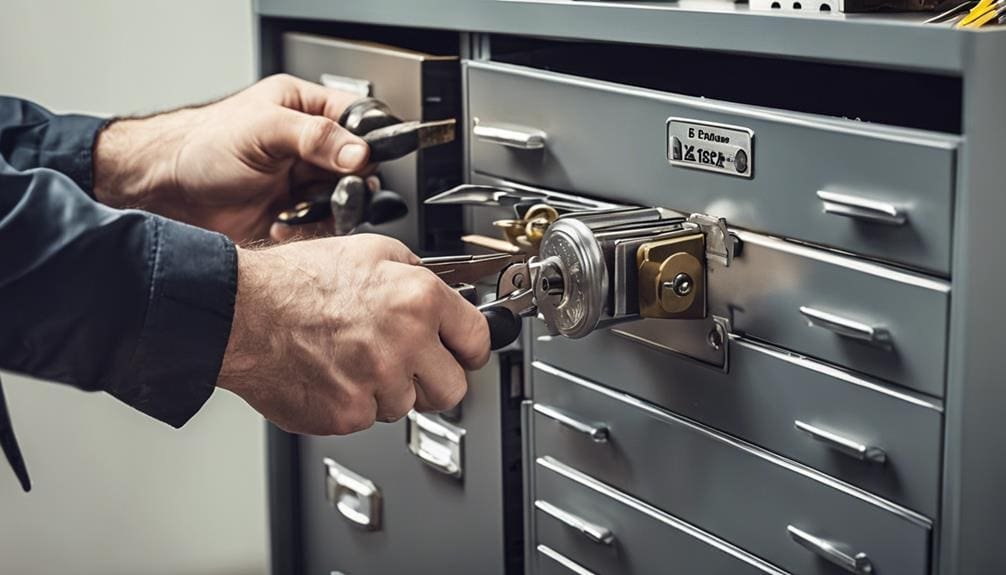
Tips for Preventing Future Spring Failures
To extend the life of your file cabinet lock and minimize the need for future repairs:
- Operate the lock gently—avoid forcing the key or handle.
- Lubricate the lock mechanism every 6–12 months with a suitable lubricant.
- Inspect the lock periodically for signs of wear or looseness.
- Address minor issues promptly to prevent further damage.
- Keep keys clean and free of debris to avoid introducing dirt into the lock.
If you notice your lock becoming loose or unstable, you can find quick fixes in this file cabinet lock loose fix resource.
Professional Help and Additional Resources
While many spring repairs are straightforward for those comfortable with basic tools, some situations call for professional assistance. If your lock is complex, integrated with a handle, or you’re unable to source the correct replacement parts, contacting a locksmith is a wise choice. For integrated handle lock systems, see fix broken file cabinet handle lock for specialized repair tips.
A professional locksmith can quickly assess the problem, source the correct parts, and ensure your cabinet is secure. Many offer 24/7 emergency services for urgent situations.
Frequently Asked Questions
How do I know if my file cabinet lock spring is broken?
Common signs include a key that turns without resistance, a lock that won’t engage or disengage, or a mechanism that feels loose or fails to return to its original position. Visual inspection of the lock cylinder after removal can confirm if the spring is snapped or missing.
Can I replace the spring myself, or should I call a locksmith?
If you have basic hand tools and are comfortable with small mechanical parts, you can often replace the spring yourself. However, if the lock is complex, parts are unavailable, or you’re unsure about the process, it’s best to consult a locksmith.
What type of lubricant should I use on my file cabinet lock?
Use a dry lubricant like graphite powder or a silicone-based spray. Avoid oil-based lubricants, as they can attract dust and debris, leading to further issues.
Is it better to repair or replace a file cabinet lock with a broken spring?
If the lock is otherwise in good condition and you can source a compatible spring, repair is usually cost-effective. If the lock is worn, damaged, or obsolete, replacement may be the better long-term solution.